

Carousels are one of the most powerful content formats available to coaches and consultants right now, and not just because they perform well in the algorithm.
They give you space. Space to actually explain something, walk someone through a framework, share a story with nuance, or lay out a process step by step. A single image can make a point. A carousel can change how someone thinks.
For coaches and consultants in particular, that depth is what builds the kind of trust that converts followers into clients. People buy from people they believe can genuinely help them, and a well-made carousel can demonstrate that in a way that a caption alone rarely does.
The challenge is coming up with ideas consistently. So here are 15 carousel concepts that work well for coaches and consultants, with notes on why each one works and how to approach it.
Educational Carousels
1. "The [X]-Step Framework I Use With Every Client"
Walk your audience through the exact process or methodology you use in your work. This is one of the most effective carousels you can post because it does two things at once: it delivers real value to the reader, and it shows them how you think.
Keep the framework tight and give each step its own slide. A "How to" approach accomplishes the same thing. The goal isn't to give away everything; it's to show that you have a system, and that the system works.
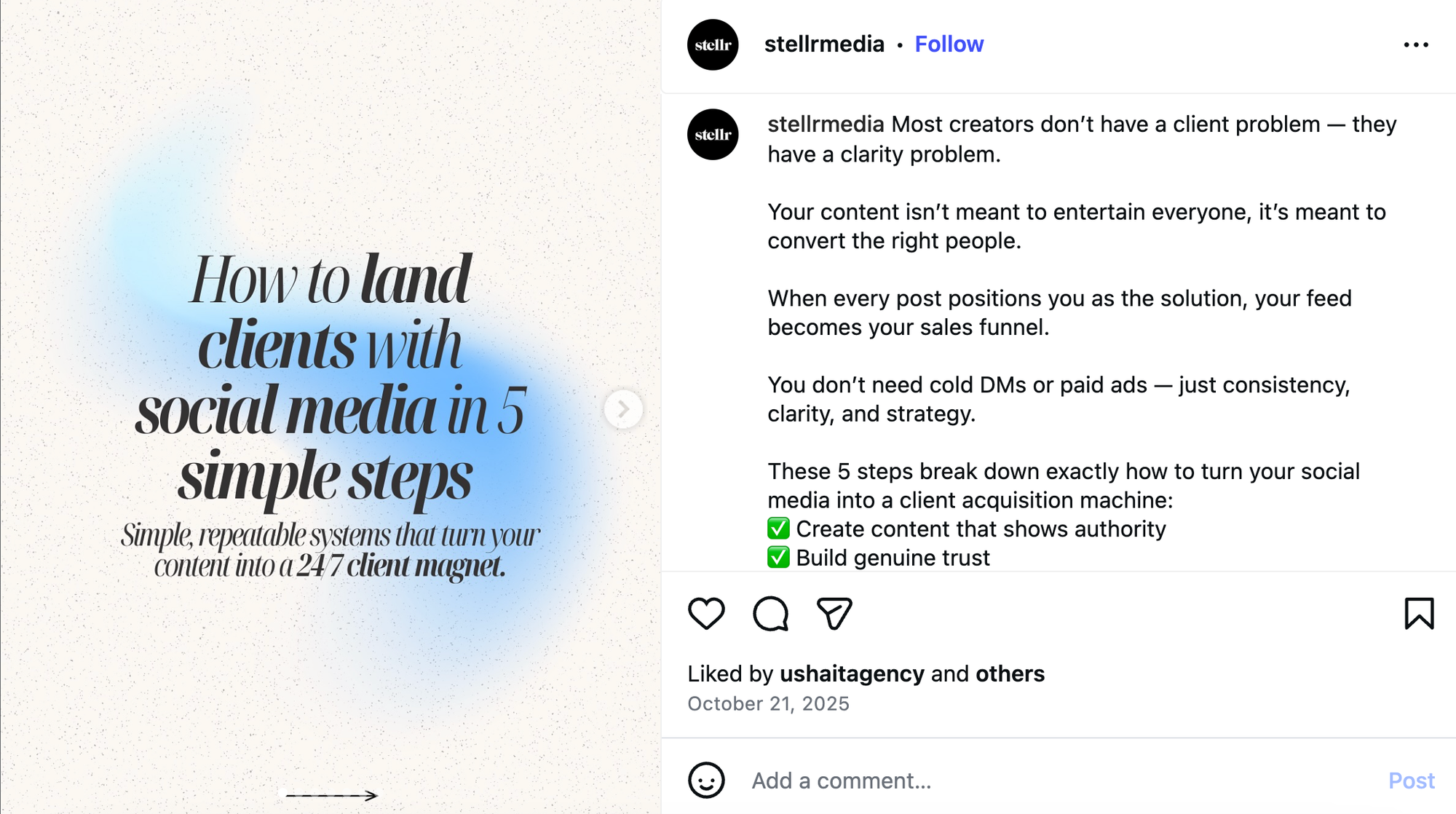
Why it works: It positions you as someone with a structured, repeatable approach rather than someone who just figures things out as they go.
2. "[Topic] 101: Everything You Need to Know"
Pick a foundational concept in your niche and break it down from scratch. Think about what your ideal client consistently misunderstands or has never had properly explained to them, then be the person who explains it clearly.
This type of carousel tends to get saved at high rates because people want to come back to it.
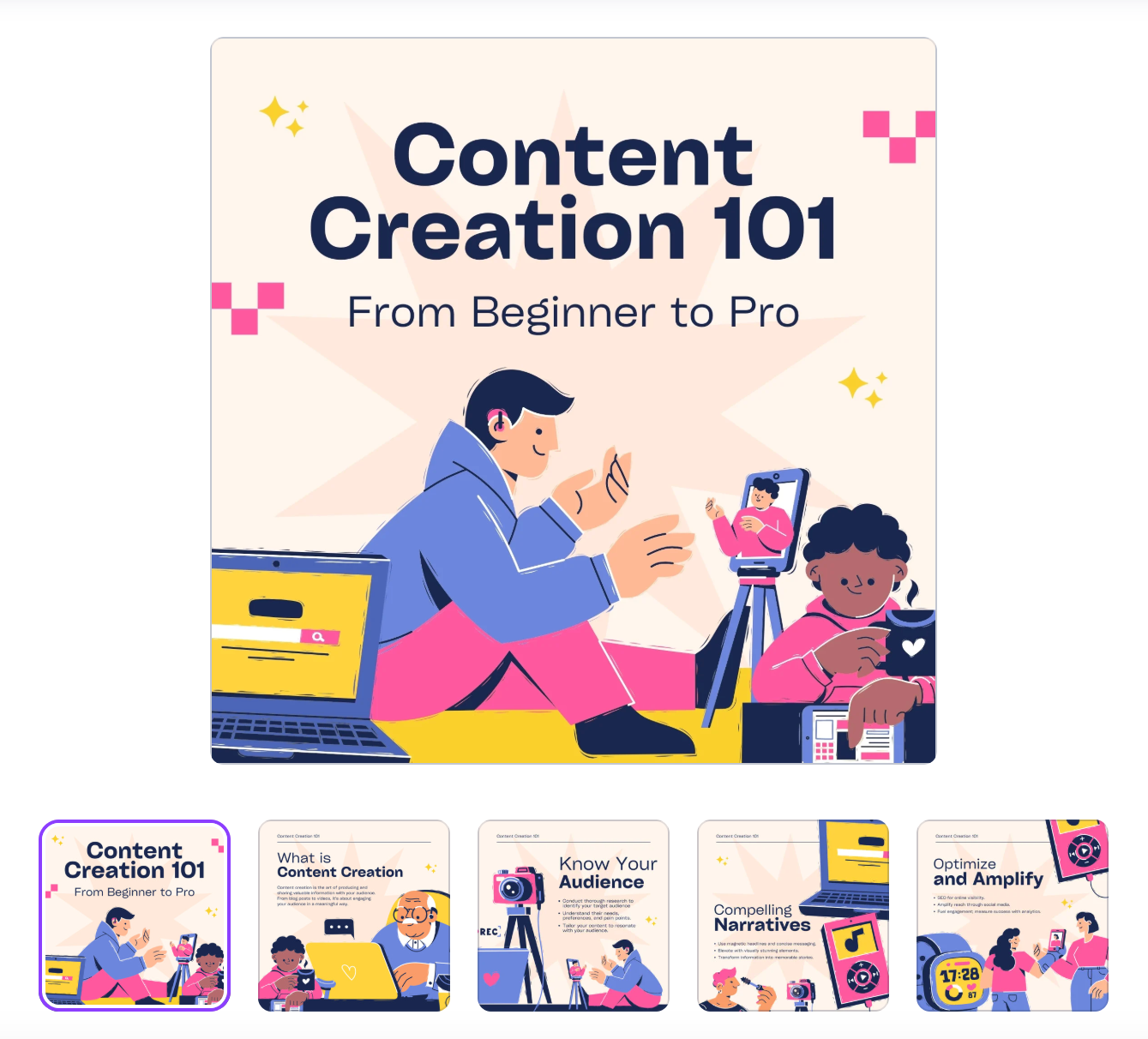
Why it works: High save rate signals to the algorithm that your content is valuable, which extends its reach beyond your existing followers.
3. "The Difference Between [X] and [Y]"
Contrast two things your audience often confuses. As a consultant, this could be the difference between strategy and tactics. As a coach, it might be the difference between a goal and an intention, or accountability and motivation.
These carousels travel well because they challenge a common assumption and make people feel like they've learned something concrete.
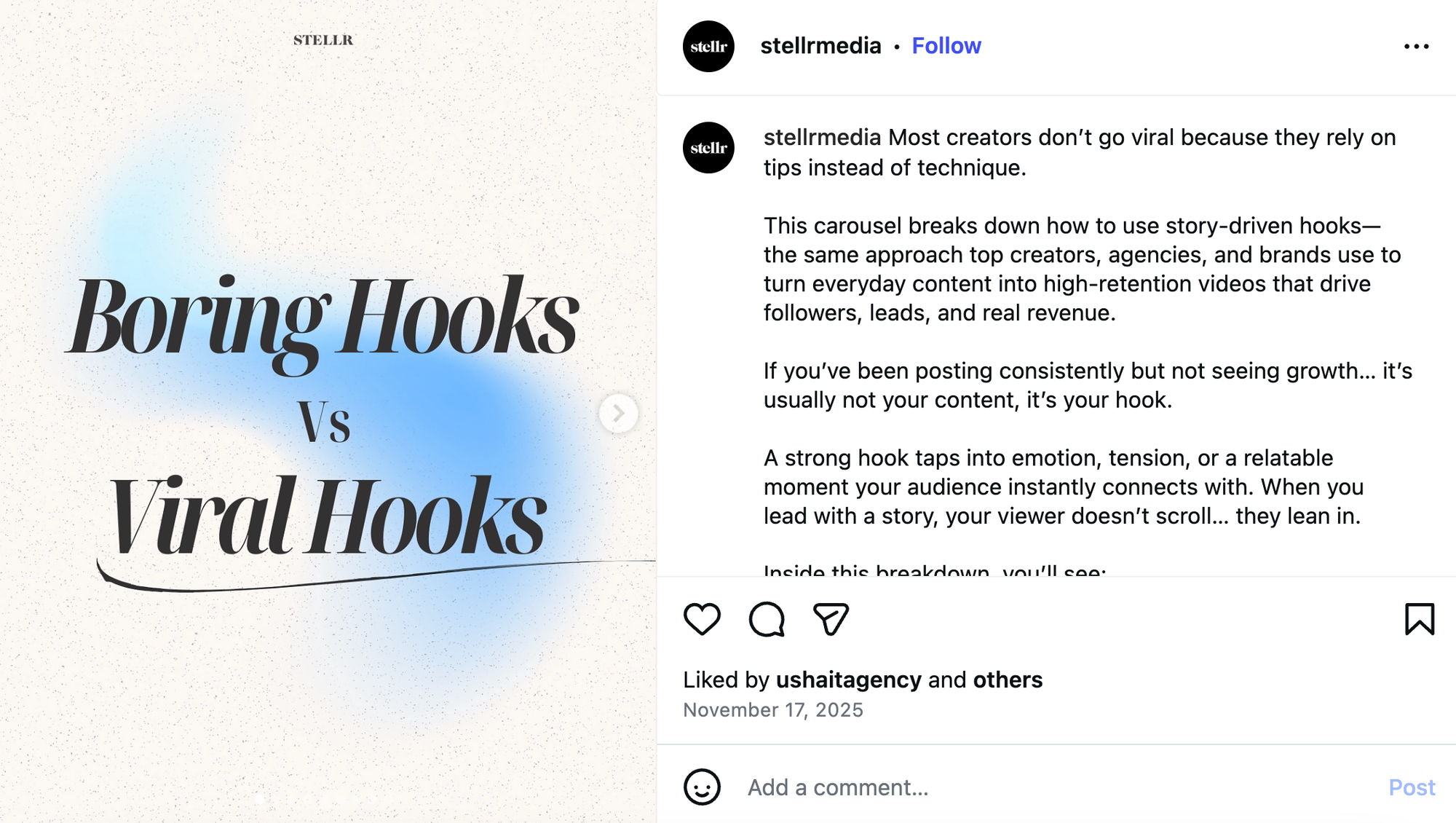
Why it works: Contrast is one of the most effective teaching tools. It forces clarity in a way that standalone definitions rarely achieve.
4. "Questions to Ask Before Hiring a [Type of Coach/Consultant]"
This one takes confidence to post because you're essentially giving your audience a checklist to evaluate you. But done well, it builds enormous trust. It shows you're not afraid of scrutiny, and it pre-qualifies readers by helping them understand what good looks like in your space.
Be honest. Include questions that genuinely matter, even if not every prospect will like the answers.
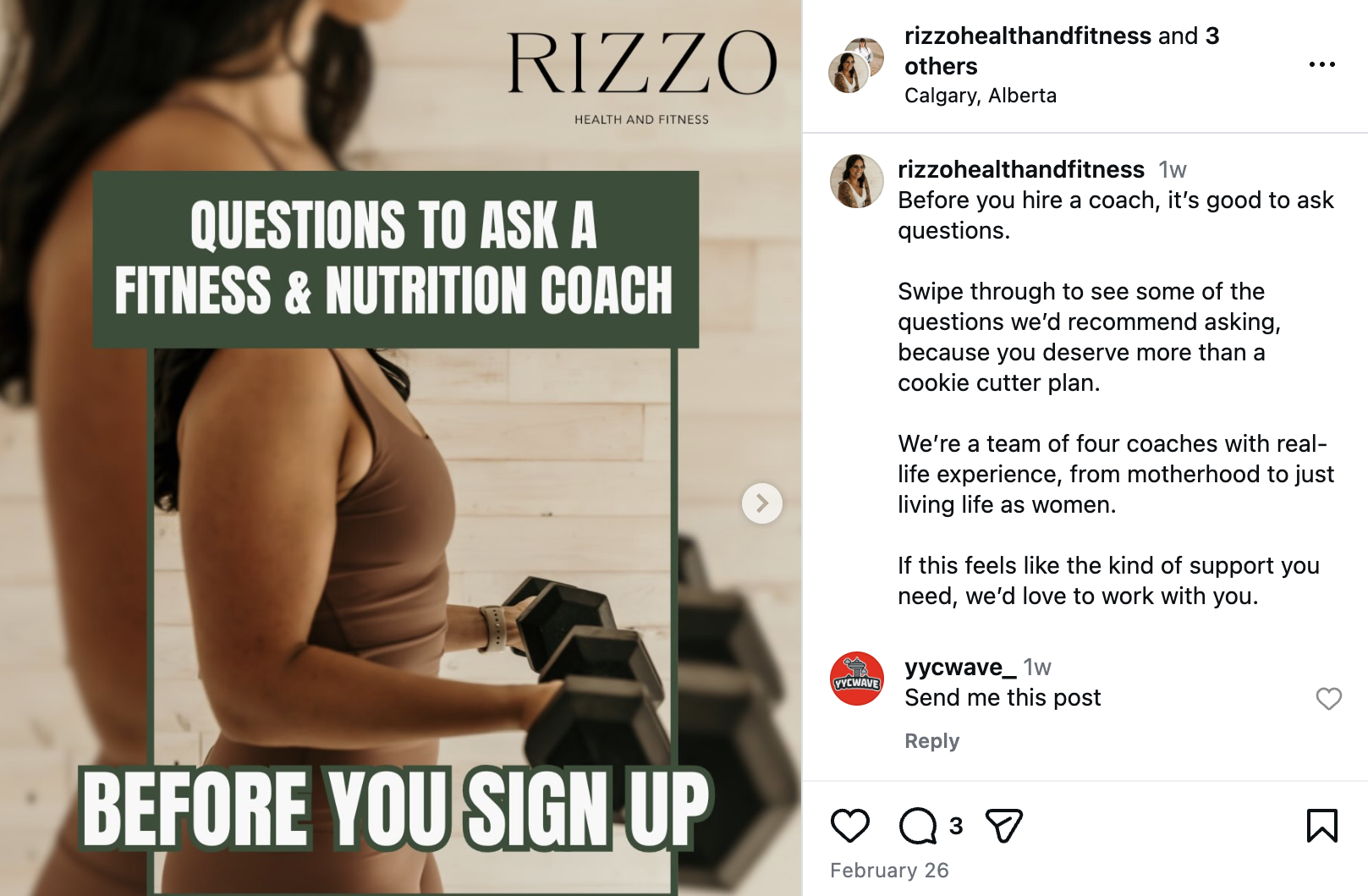
Why it works: It attracts the right clients and repels the wrong ones, which saves everyone time. It also signals confidence and transparency.
5. "What [Result] Actually Takes"
Set expectations honestly. What does it actually take to achieve the result your clients come to you for? What's the realistic timeline? What do most people underestimate?
This carousel works best when it's specific and direct. Vague answers here lose people. Specific, slightly uncomfortable truths earn trust.
Why it works: It filters for serious prospects while establishing you as someone who gives it to people straight, which is exactly who serious buyers want to work with.
Trust and Authority Carousels
6. "Mistakes I See [Target Audience] Making All the Time"
Point out the common errors, misconceptions, or blind spots you see in the people you work with. Keep the tone empathetic rather than superior. The goal is to make your audience feel seen, not judged.
Use language like "I used to make this one too" or "most people don't realise this until..." to keep it relatable.
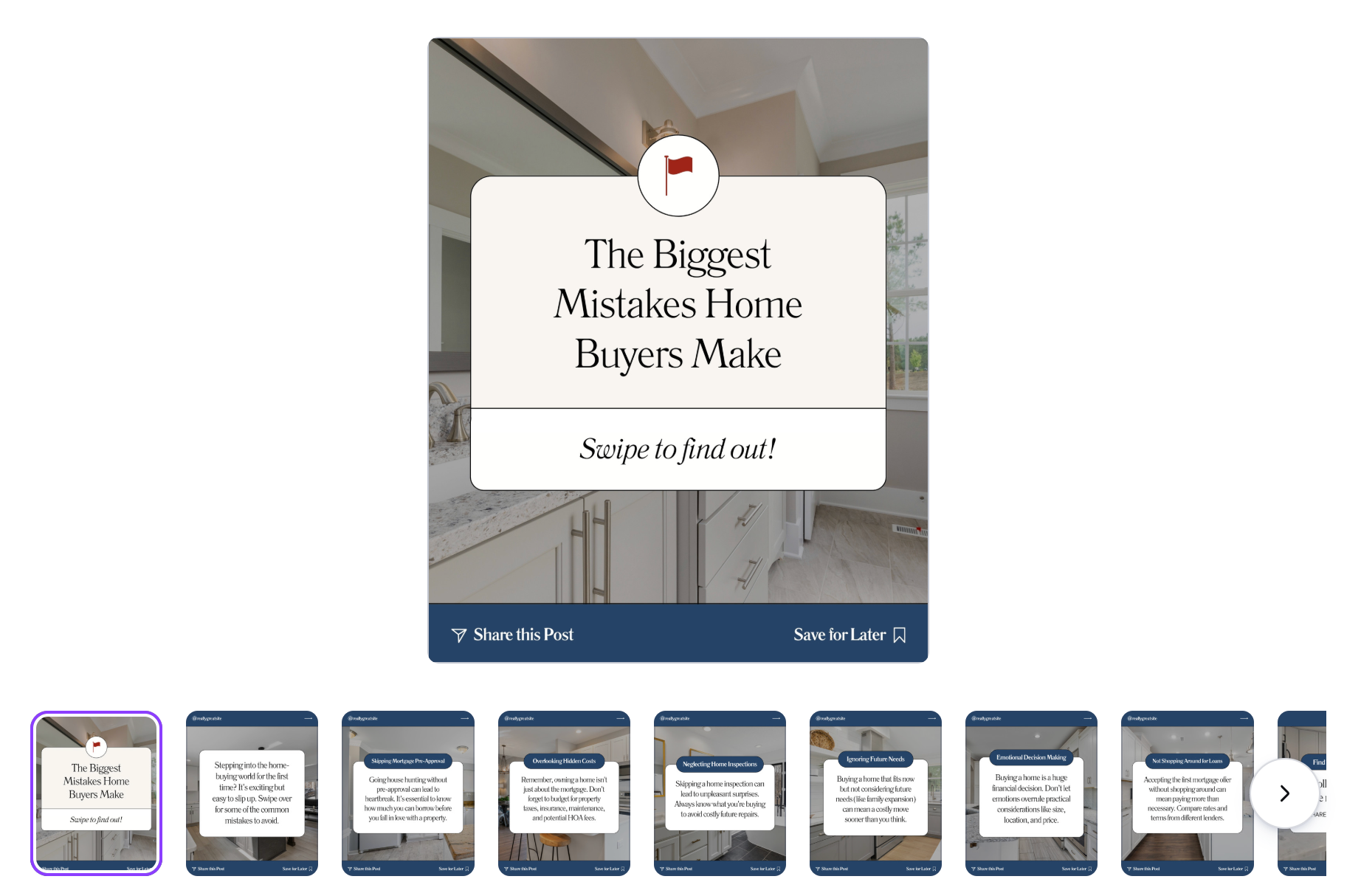
Why it works: It demonstrates expertise through observation rather than self-promotion, which tends to land much better.
7. "My [Honest/Unpopular] Take on [Industry Topic]"
Share a perspective that goes against conventional wisdom in your space. Keep it grounded in your experience and logic, not just contrarianism for its own sake.
These carousels spark conversation. People who agree will share them. People who disagree will comment. Either way, your reach expands.
Why it works: A well-reasoned take that challenges the norm positions you as a credible, independent thinker rather than someone who just repeats what's already out there.
8. "What Nobody Told Me When I Started [Your Journey]"
Share the lessons you wish you'd had earlier. This works for both coaches who've been through a transformation themselves and consultants who've spent years in an industry before going independent.
Keep it personal and specific. Generic lessons ("believe in yourself") don't resonate. Specific ones ("I thought I needed a bigger audience before I could charge properly, and I was wrong for two years because of it") do.
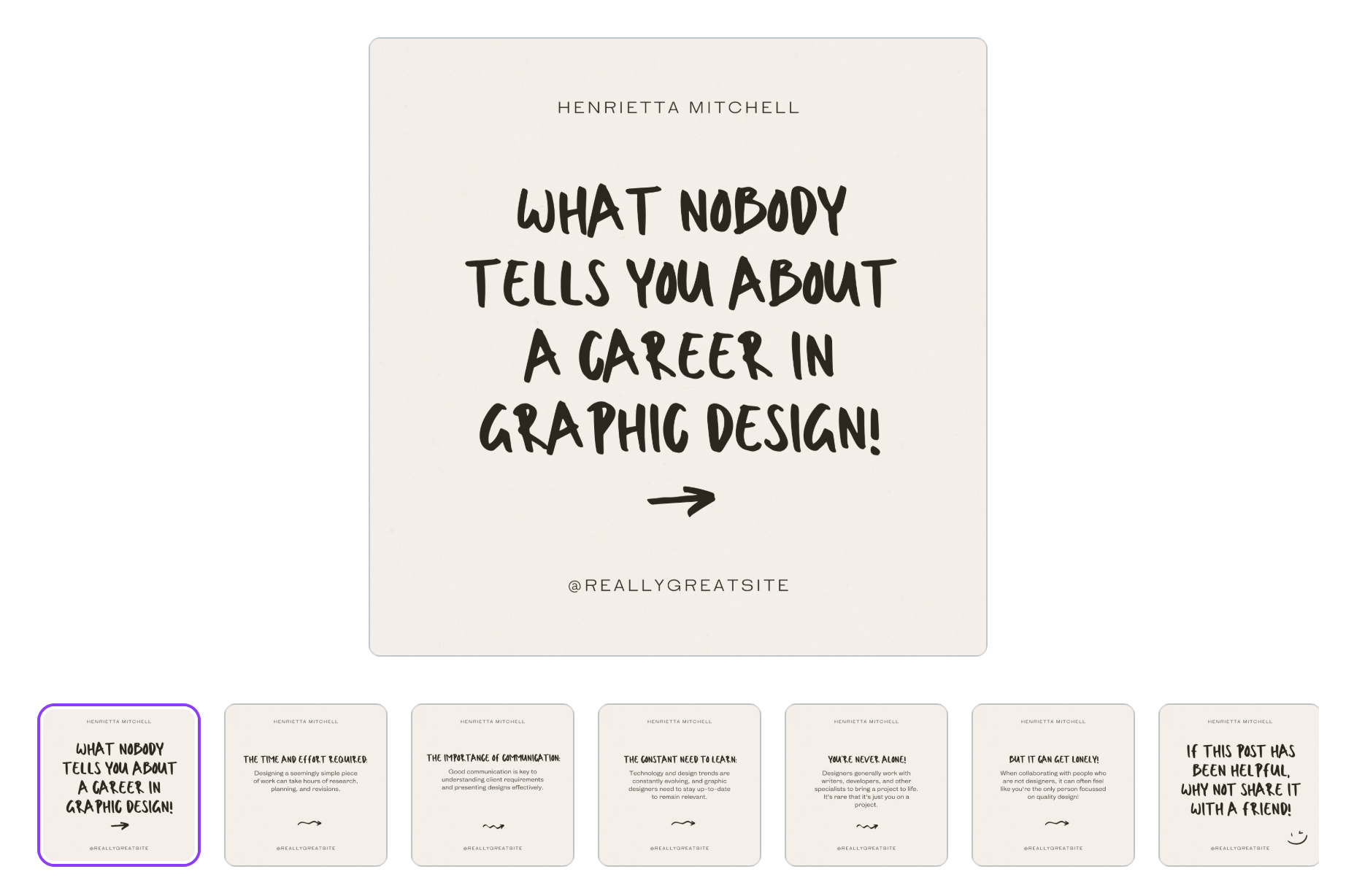
Why it works: Personal specificity creates connection. Your audience starts to feel like they know you, which is a prerequisite for them ever buying from you.
9. "Signs You're Ready for [Your Service or Program]"
Help your audience self-identify as a good fit. List the specific indicators that someone is at the right stage for what you offer, whether that's a coaching programme, a consulting engagement, or a course.
This carousel quietly pre-qualifies without feeling salesy because it's framed as information rather than a pitch.

Why it works: It shortens the decision-making process for people who are already a good fit and helps those who aren't yet understand what they're working towards.
Inspiration and Storytelling Carousels
10. "The Moment Everything Changed for Me"
Tell the story of a turning point in your business, your thinking, or your life. Keep it honest, specific, and focused on the shift rather than just the outcome.
The best version of this carousel doesn't wrap up too neatly. Real turning points are messy. Showing that messiness makes the story credible.
Why it works: Story is the fastest path to emotional connection. People remember stories long after they've forgotten any framework or tip you've shared.
11. "A Client Win I'm Proud Of (and Why)"
Share a genuine success story with enough detail that your audience understands the before, the process, and the after. Get permission from your client first, and be specific about the transformation rather than just the result.
"She went from 0 to 10k followers" is fine. "She went from posting twice a month out of obligation to posting four times a week with a strategy she actually believed in, and her audience went from disengaged to actively DMing her" is better.
Why it works: Specificity in client stories makes social proof feel real rather than curated. Readers project themselves into the story and start imagining what working with you could look like.
12. "A Day in My Life as a [Coach/Consultant]"
Pull back the curtain on how you actually work. What does your day look like? How many clients do you see? How do you structure your time? What does the business side of things actually involve?
This humanizes you and answers questions your audience is often curious about but won't always ask directly.

Why it works: Transparency about what the job looks like builds familiarity. Familiarity builds trust. Trust converts.
Conversion Carousels
13. "Is [Your Product/Program/Service] Right for You?"
Walk through the specific situations where your offer is the right fit and, just as importantly, where it might not be. Being explicit about who you're not for makes the "who you are for" section feel far more credible.
End with a clear call to action for those who identify with the right-fit description.
Why it works: The honesty of the "not for you" section makes everything else in the carousel more believable. It reads as guidance rather than a sales pitch.
14. "Here's Exactly What We Do Together in [Your Programme]"
Take the mystery out of your offer. Walk through the structure, the milestones, the support they'll get, and what they can expect at each stage. The more specific you are, the easier it is for a ready buyer to say yes.
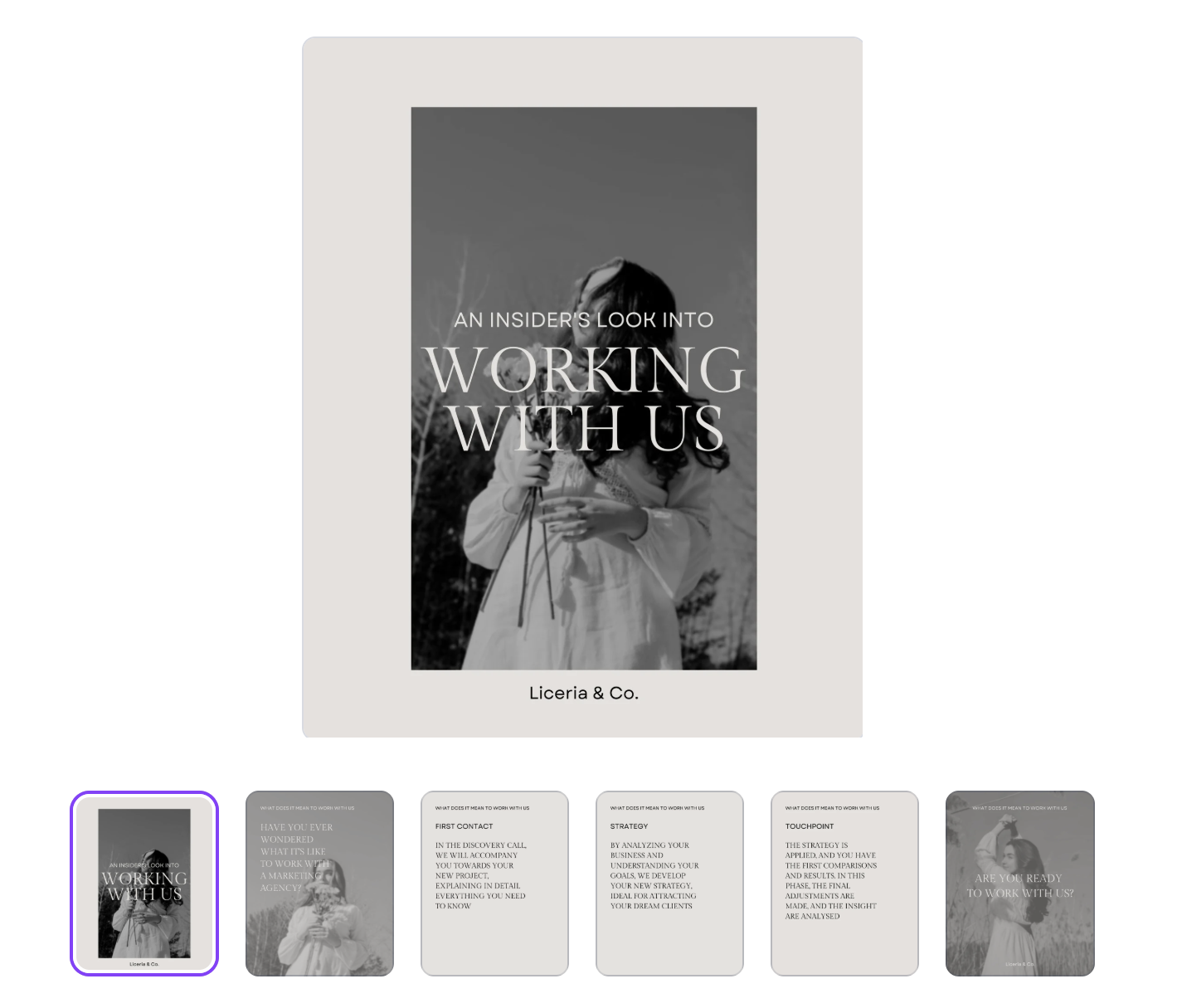
Why it works: Confusion kills conversions. A carousel that clearly answers "but what exactly do I get?" removes one of the most common reasons people hesitate.
15. "Before I Hired a [Coach/Consultant]... vs. After"
This one can be told from your own experience (if relevant) or used as a way to give voice to the kind of before-and-after your clients experience. Pair contrasting statements on alternating slides: the belief before, the reality after. The struggle before, the shift after.
Keep the language your audience actually uses rather than polished coaching-speak.
Why it works: Before-and-after framing is one of the most intuitive ways to communicate transformation. It's simple, direct, and easy for your audience to immediately apply to their own situation.
Making These Carousels Faster to Produce
Coming up with ideas is one thing. Actually producing the carousels is another.
For coaches and consultants who want their carousel content to look professional and consistent without spending hours in Canva, Carousel Studio is worth knowing about. It's a third-party app that lives inside the Canva App Marketplace. Give it a topic, choose a tone, and it generates a polished, ready-to-customise carousel in under a minute. Your brand colours and fonts get saved for next time, so every carousel you make is faster than the last.
For content formats that rely on consistency and volume (which carousels do), anything that reduces the friction between idea and published post is worth building into your workflow.
Frequently Asked Questions
How often should coaches and consultants post carousels on Instagram?
Once or twice a week is a solid starting point for carousel content specifically. Carousels take more effort to produce than single images or Reels, so consistency matters more than frequency. One well-made carousel per week, posted consistently, will outperform sporadic bursts of content every time.
What should the first slide of a coaching carousel say?
The first slide needs to earn the swipe by making the reader feel that swiping through is worth their time. A direct promise ("Here's the 5-step framework I use with every new client"), a relatable observation ("Most coaches undercharge for the first two years. Here's why"), or a curiosity gap ("The question I ask every client in session one") all work well. Avoid vague or generic openers that could apply to anyone.
Should I include a call to action in every carousel?
Yes, every time. The last slide of every carousel should give readers one clear next step. It doesn't have to be a pitch. "Save this for later," "share with someone who needs it," or "tell me in the comments which step resonates most" are all effective CTAs that drive engagement without feeling pushy.
How long should each slide be?
Short. Aim for one clear point per slide, expressed in as few words as possible. Most people are swiping on mobile, which means small screens and short attention spans. If a slide needs more than two or three sentences to make its point, consider splitting it into two slides instead.
Do carousels work better than Reels for coaches and consultants?
Both formats serve different purposes. Reels tend to drive reach and new followers, while carousels tend to drive saves, shares, and deeper engagement from an existing audience. For coaches and consultants specifically, carousels are often more effective at building trust and demonstrating expertise because the format gives you room to actually teach something. A strong content strategy typically uses both.